

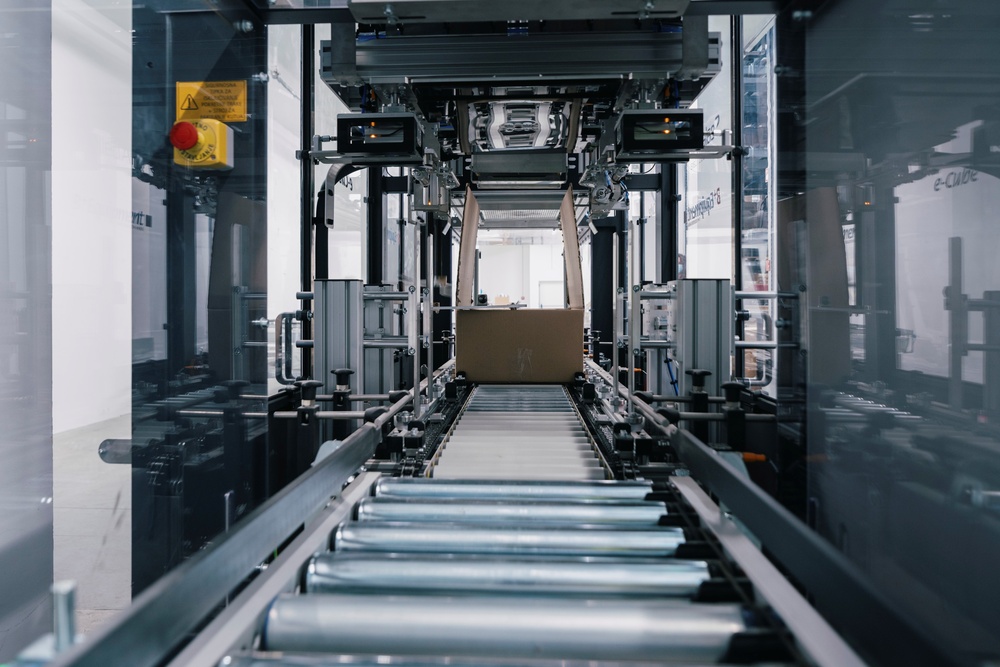
For a modern packaging facility, efficiency means everything. Employees now perform at a speed that would have seemed unbelievable ten years ago, with the continual aim to increase productivity. However, the slowest piece of equipment on the line may not be a motor, conveyor or vision system. Sometimes it’s the glue.
Despite the fact that hot melt adhesives are the standard choice of modern end-of-line packaging operations, poor formulation of an adhesive may slow down the productivity rate. Excessive set time means that compression zones have to be lengthened, and lines need to be slowed down. A rapid set time cuts down the open time, making it impossible for bonds to form prior to flap closure. Whatever the case, the result will be the same – loss of productivity and frustration.
Hidden Costs of Performance of the Adhesive
Issues with adhesive performance can occur due to improper formulation. Adhesives with low thermal stability tend to char, skin over and change the viscosity if they stay at working temperature for too long. In this situation, the outcome will involve nozzle clogging, stringing, and misaligned bead positioning. As the result, maintenance team will waste its time, and downtime will be unplanned.
Additionally, many facilities often heat the adhesives above the recommended temperature to reduce high viscosity. When these situations occur, the amount spent on energy will increase, and the safety of the workers could be at risk. Moreover, excessive heat will accelerate the degradation of the adhesive. Over the course of the year, these minor inefficiencies will develop into much more serious problems.
The Role of the Wax in Adhesive Properties
Wax is a crucial component of hot melt adhesive, even though it doesn’t receive as much focus as the polymer backbone and tackifying resins. The wax defines the viscosity of the adhesive, sets the rate of setting, and gives thermal resistance. This approach to selecting the correct wax type can secure the success of the adhesion process.
Although they are cheaper, paraffin waxes made from crude oil are commonly used due to their variable melting points and setting characteristics, which result from a broad range of molecular weights. According to the team at Trecora, this is why synthetic waxes are becoming increasingly popular among formulators.
Questions to Ask about Your Current Adhesive
These simple questions will help you understand whether your adhesive slows down your production:
- Is the maximum line speed limited by compression time or impossibility to form the bond?
- How often do you change your nozzles because of charring?
- Is the melt tank temperature higher than the range suggested by the adhesive manufacturer?
- Does the bonding happen consistently both in warehouse heat in summer and under cold chain conditions in winter?
If you respond affirmatively to any of these questions, your adhesive formula needs to be revised.
Collaboration with the Supplier
Nonetheless, this reformulation is not sudden and typically requires the participation of the customer, the adhesive manufacturer, and occasionally the raw material supplier.
Trial runs of the production line are important since results in the laboratory do not necessarily represent actual field conditions. Because most manufacturers deliver technical help right on site, the entire evaluation procedure would be greatly streamlined.
Conclusion
Typically, people view glue simply as another item to buy, often making their choice based on the price per pound. However, the costs of the hot melt include extra energy use, maintenance expenses, scrappage, and the loss of productivity. Companies that think over reformulation of their adhesive formulas, especially where it concerns the wax component, are likely to expedite their operations.
