

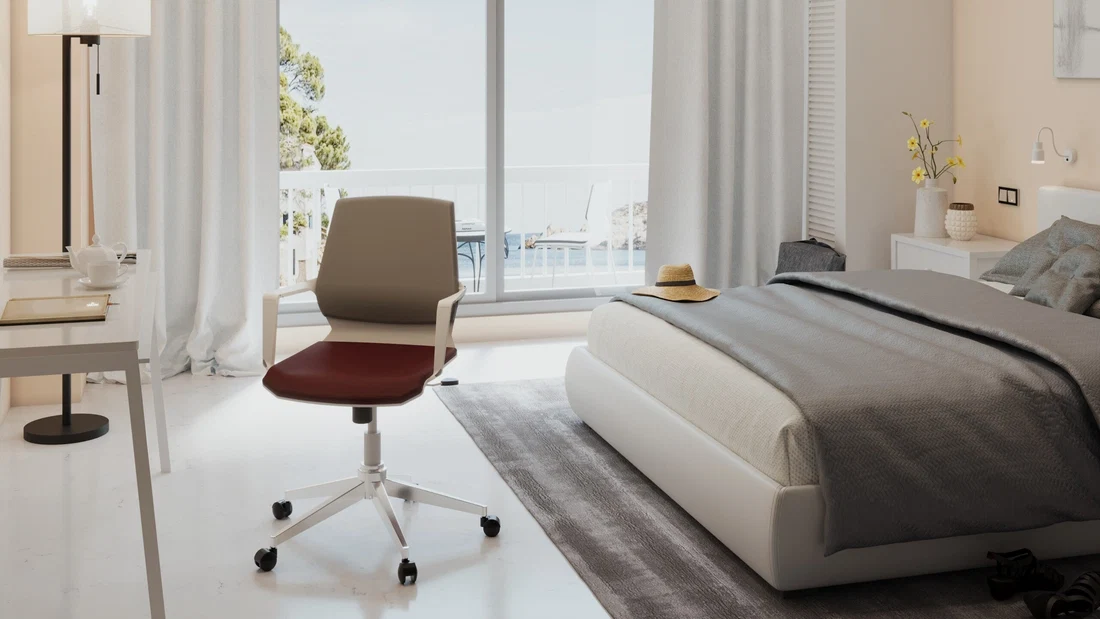
A home office chair can look like a simple purchase, but the right one can make a noticeable difference to how comfortable and productive your working day feels. Whether you work from home full-time, spend a few days a week at your desk or simply need a better place to sit, it is worth looking beyond appearance. When comparing home office chairs, think about how the chair will support you throughout the hours you actually spend working.
A stylish chair may look perfect in your workspace, but if it leaves you shifting around after an hour, it is unlikely to be a good investment. Comfort, adjustability, support, and the size of your workspace all deserve attention before you make a decision.
Start With How You Work
Before choosing a chair, consider your typical working day. Someone who spends eight hours at a desk will have different requirements from someone who only uses their home office occasionally.
Think about how long you normally sit, whether you frequently move between tasks, and whether you tend to lean forward towards your screen. If your work involves video calls, writing, designing, or long periods of concentrated screen time, a chair that allows you to adjust your position can be particularly useful.
Your habits matter just as much as the chair itself. Even a well-designed chair cannot compensate for a desk setup that forces you into an awkward position.
Adjustability Matters More Than You Think
One of the biggest mistakes people make is choosing a chair based solely on its appearance. A chair should work with your body and desk rather than simply look good beside them.
Seat height is one of the first things to check. Ideally, your feet should rest comfortably on the floor while your knees remain in a relaxed position. You should also be able to sit close enough to your desk without having to reach forward constantly.
Other useful adjustments can include seat depth, back support, armrest height, and tilt. Having several adjustment options makes it easier to find a position that feels natural rather than forcing yourself to adapt to a fixed design.
Consider the back support.
Your chair should provide comfortable support without making you feel restricted. A supportive backrest can help you maintain a more natural sitting position during long periods at your desk.
Pay attention to the shape of the backrest and where it supports your body. Some people prefer a chair with more pronounced lumbar support, while others find a simpler, more flexible design comfortable.
If possible, consider how the chair feels when you sit back properly rather than only testing it while leaning forward. Your preferred sitting position can change throughout the day, so flexibility is valuable.
Do Not Ignore the Seat
The seat itself deserves just as much consideration as the backrest. Too firm and it may become uncomfortable over time; too soft and you may feel as though you are sinking into it.
Seat width and depth are also important. A chair should give you enough room to sit comfortably without taking up more space than your home office can accommodate.
If you have a compact workspace, check the overall dimensions before buying. A large chair may look impressive online but can quickly make a smaller room feel crowded.
Match the Chair to Your Desk
A chair should be considered as part of the wider workstation rather than as an isolated piece of furniture.
Check the height of your desk and make sure the chair can be adjusted to create a comfortable relationship between your seat, keyboard, and screen. You should not have to raise your shoulders or bend your wrists awkwardly just to reach your equipment.
It is also worth thinking about how much space you need to move your chair in and out. Casters, armrests, and the chair’s overall footprint can all affect how easily you move around your workspace.
Think About Materials and Maintenance
The material of a chair affects both its appearance and everyday practicality. Fabric can create a softer, warmer feel, while other materials may be easier to wipe clean.
Consider the temperature of your workspace, how often you use the chair, and how much maintenance you are prepared to do. A chair that looks excellent when new should still be practical after months of regular use.
Color matters too, particularly if you are creating a carefully designed home office. Neutral shades can blend easily with existing furniture, while a more distinctive chair can become a feature in its own right.
Do Not Buy Based on Looks Alone
There is nothing wrong with wanting a chair that complements your interior. Your home office should be somewhere you enjoy spending time. However, appearance should not be the deciding factor.
Before buying, check the measurements, available adjustments, materials, and intended use. If you can try the chair in person, pay attention to how it feels after sitting for more than a few minutes. Online reviews can also help reveal practical details that may not be obvious from product photographs.
Make Comfort the Priority
Choosing a home office chair is ultimately about finding the right balance between support, comfort, functionality, and design. The best option is not necessarily the most expensive or the most visually striking. It is the one that suits your working habits and fits naturally into your space.
Take the time to consider how you actually work before making a purchase. A little research at the beginning can help you create a workspace that feels comfortable, practical, and much easier to use every day.
